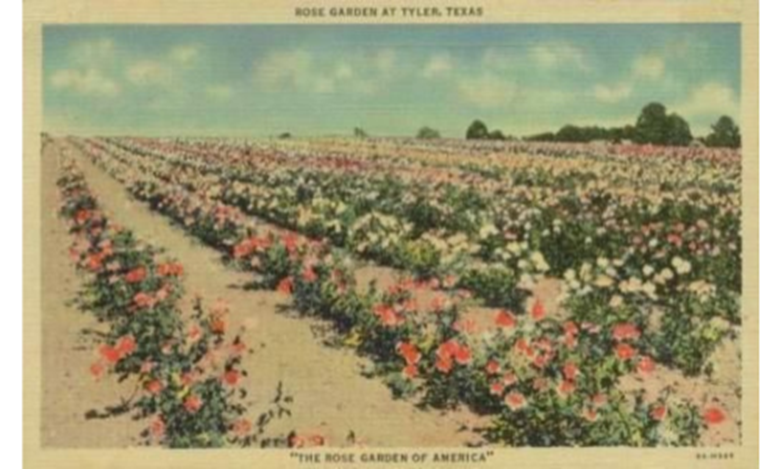
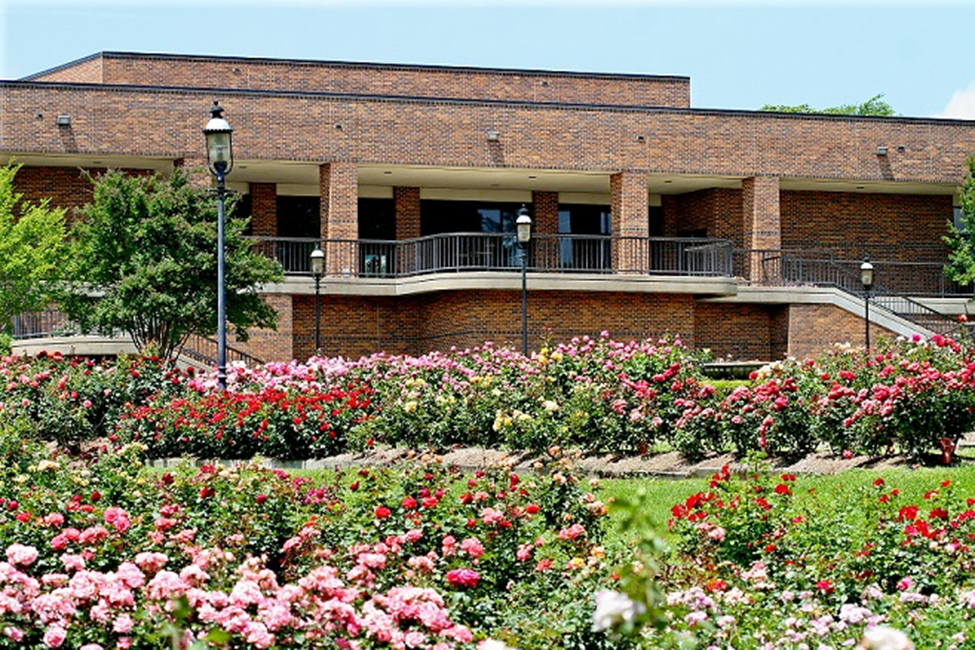
 The property that is now home to the Tyler Rose Garden was first purchased by the City of Tyler in 1912 for the construction of a park and fairgrounds. After many years and at the urging of former American Rose Society President Dr. Horace McFarland, an application to the Works Project Administration (WPA) was made in 1938 to fund the construction of a municipal rose garden. The $181,255 federal grant was thought to be the largest municipal park and rose garden project approved by the WPA in that era. It was used to construct a stone picnic pavilion, balcony, stairs and other garden features.
Keith Maxwell, the WPA landscape architect, drew the plan for park and rose garden. The plan was ultimately revised by Henry Thompson, a local nurseryman, who laid out walkways, planted trees and shrubbery. Thompson would later be killed while serving as a fighter pilot during Word War II. The garden would eventually be dedicated in his memory.
Development of the gardens was suspended during WWII because of Tyler's vigorous war effort. Following the war, Robert Shelton, Jr. became the Superintendent of the Parks and Recreation Department in 1950 and made it his top priority to complete the garden.
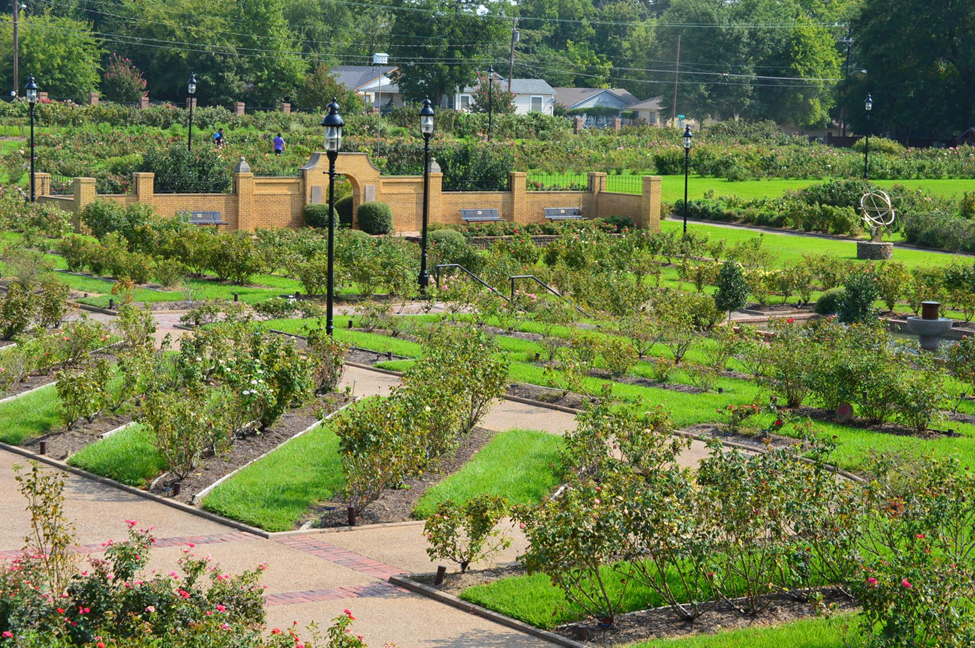 Before the first rose could be planted, extensive work had to be done to transform the red clay soil to create an environment conducive for growing roses. Using a cemetery backhoe, 36 inch wide beds were dug and back filled with topsoil, sand and sludge. In 1952 the Tyler Rose Garden was officially opened. The roses in the first garden were donated by local nurseries with the intent of creating a living catalog of roses produced by the Tyler rose industry. Nearly 3,000 rose bushes were used in the first planting.
In 2018, The Texas Chapter of the American Planning Association (APA) recognized the Tyler Municipal Rose Garden as one of the 2018 Great Public Spaces in Texas. This recognition is part of the APA's Great Places in Texas program that recognizes and promotes streets, neighborhoods, and public spaces that "exemplify exceptional character".
After a two-year-long application process, the Tyler Municipal Rose Garden was officially recognized as a "national treasure" on the National Register of Historic Places, at a ceremony in October 2019. The National Register of Historic Places is the official list of the country's historic buildings, districts, sites, structures, and objects worthy of preservation. The Tyler Municipal Rose Garden joins other Smith County landmarks, such as the Azalea Residential Historic District, the Blackstone Building, Carnegie Public Library, Cotton Belt Building, and others.
 In 2023, The Tyler Municipal Rose Garden was honored with a Lone Star Legacy Park designation. It is classified as a park that holds special prominence in the local community and the state of Texas. To qualify for consideration, the park must have endured the test of time and become iconic to those who have visited, played and rested on its grounds. The Tyler Municipal Rose Garden was one of seven parks and open spaces in the State of Texas to receive this designation in 2023. Lone Star Legacy Parks must be at least 50 years old, open to the public and have a significant role in the community history. This will be the 11th year for the Lone Star Legacy Park program. After the Class of 2023 parks are added there will be a total of 72 Lone Star Legacy Parks throughout our great state.
Looking into the future, the City of Tyler Parks and Recreation Department plan to renovate the inside of the Rose Garden Center update the aesthetics to better compliment the rest of the Tyler Rose Complex. In addition, we continue to plan ways to enhance the garden while maintaining the rich history of this living catalog of roses and other flora and fauna.